
Expecting Great Things
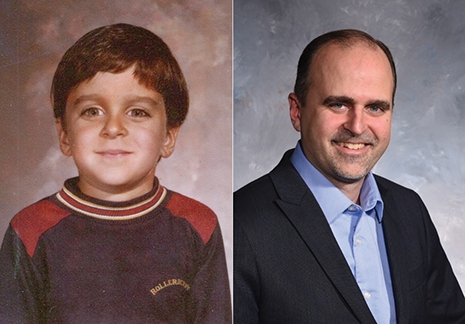
Growing up in a collaborative mission community was the greatest privilege of a lifetime and continues to impact me to this day. I signed up for membership right out of high school. They didn’t quite know what to do with someone my age, so they invented a special membership category to make it possible. This was typical of the innovative culture Ralph Winter fostered. In fact, his mission was the only one my parents could find that would welcome and encourage a growing family like ours—10 kids eventually!
Creativity was everywhere. New ministries were being birthed in every building on the 17-acre campus to tackle various challenges and gaps in frontier mission. My dad would lead daily tours in those early years, and I would sometimes accompany him. It was fascinating to hear him weave together all the initiatives of the campus into the four sectors of Mobilization, Training, Strategy, and Services. New ministries like Caleb Project, Frontiers, AD2000, Global Mapping, and DAWN ministries were launched in small offices that used to be dorms and college classrooms. The whole atmosphere was one of an innovation hub or incubator, as Dr. Winter sometimes called it.
But the most impactful aspect for me personally was the broad representation of the Body of Christ. My family was Pentecostal. We served alongside Presbyterians, Episcopalians, Baptists, and Nazarenes, many of whom had decades of missionary experience. It was amazing to discover that believers from all these backgrounds were just as Spirit-filled as we were! An elderly staff member, Henrietta Watson, had served in India. She pioneered the Institute for Hindu Studies on the campus. She prayed quietly and reverently in the old En-glish style, using Thees and Thous. It was something I had never heard before! Yet, when she prayed, you felt as though you were transported before the throne of God.
When I look back, it was these types of encounters and experiences that I remember the most. Each morning, the community would gather to share what they were learning in the Word and to pray for the nations.
So many times, I witnessed a particular theme emerging in that sharing—as if God was speaking to us collectively. As a young person observing a community practice daily spiritual disciplines together, I wanted to be a part of it all. From an early age, I began getting up early in the morning to pray, as I observed my parents doing in concert with others. The spiritual disciplines I cultivated during that time have continued with me to this day.
One of the great aspects of the community was how they invited and made space for everyone to participate. My mom served on the housing committee that managed the many homes owned by the community. We kids often had opportunities to volunteer, especially in the summers. There was always something meaningful to do. Perhaps the most amazing thing was seeing God provide for the purchase of the campus. A large payment had to be raised monthly. We pitched in to help with mailings or joined our parents in intercession during their shifts in the 24/7 prayer room. We participated in prayer marches around the campus and believed God was going to do what seemed impossible. Every time, he came through and then we started all over again until the campus was paid for in full after a decade and a half of prayers.
We saw God’s provision in our family support as well. We had no idea what would come in from month to month. We didn’t have much, but neither did anyone else! We were all in it together. We always saw God providing what we needed, not just for ourselves but with everyone in our community. I saw families sharing with one another everything they had. We thought of it as living a missionary lifestyle, a way of identifying with those we were seeking to serve on the front lines. But in many ways, I feel like what we had there was the closest to New Testament church life I have ever seen.
Each Thursday, we would gather for a community meal, and, afterwards, we would meet to hear from a missionary and pray for an unreached area of the world. There was never any shortage of missionaries to hear from. The whole campus was full of them. They were coming and going from so many fields. We learned about places most kids never knew existed—let alone knowing someone who lived there. During those community times, any of us could walk right up to Ralph Winter and talk to him about whatever was on our mind. He never turned anyone away! So, I took full advantage of it. I was so fascinated by our conversations, eventually I had the privilege to be one of his assistants in the last year of his life. Perhaps the most important thing I learned from sitting at his feet was this: If God wants something done, he will do it through anyone who is willing to try. He loves to take ordinary people and do extra-ordinary things for the sake of his mission. Having seen what God did through the faith of those Pasadena pioneers, I now truly believe if there are any regrets in Heaven, it will be among those who never bet it all on God’s kingdom.
These Are Still My People
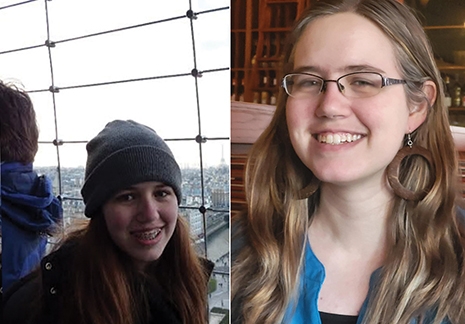
One of the biggest opportunities I had growing up with parents who worked for the USCWM, was to go on a two-week trip to Morocco. My dad had been asked to join the founder of the Nomadic Peoples Network on an exploratory trip of the region and hold a consultation for missionaries in the surrounding countries to learn about working with nomads. My dad asked me if I would like to come along. It was an excellent opportunity for me as a 17-year-old girl. I would help make three tall men look less intimidating. I heard the Muslim call to prayer for the first time, and I witnessed the complex politics of the region. I listened (not always understanding much) to conversations in five languages—two dialects of Arabic, French, Spanish, and English.
While growing up on the USCWM campus, I saw countless opportunities for growth. My dad would teach us what he had learned from the Perspectives course, or what he was learning from his work. I helped with mailings for Mission Frontiers, the International Journal of Frontier Missiology, and people’s personal newsletters. As I got older, I had jobs in Personnel, William Carey Library (now William Carey Publishing), and William Carey International University’s Admissions and Records department (they are now a separate organization but were part of the same umbrella organization at the time). As a high school student, I was guiding prospective students from all over the world through our PhD program application process via email. I always wondered how they would react if they knew I was in high school. When I left the campus to go to college, I lost touch with what was going on there, even though I came home to visit.
In the intervening years, I was asked by friends who had taken the Perspectives course, if that was where some of my ideas came from. I had to think about it. Yes, those concepts are in Perspectives and that is probably why they were ingrained in me, but that was not how I was thinking about them. To me, they were just things I believed to be true, and probably first heard from my parents growing up.
Coming back to work at Frontier Ventures as an adult was, in many ways, like coming home. The name had changed, there were many new people, and people had left, but many aspects remained the same. I work remotely as do many of our staff, post pandemic. Even though the living together community aspect is no longer there, these are still my people; the ideology around missiology is still familiar. I continue to learn and grow here. One of the standout experiences since coming back was having the opportunity to be on the team that put on the first Perspectives intensive in Francophone Africa. I was honored to be involved despite not speaking French. A moment I will never forget, was at the celebration at the end of the course, when the students came up to the front, received their certificates and then were prayed for by the coordinating team and instructors. Being up at the front of the room, praying for these ministry leaders, I was extremely humbled. Who was I to pray for them? All I could do was rely on the Holy Spirit to give me words, or I would not have even been able to speak.
The Legacy of the FMF
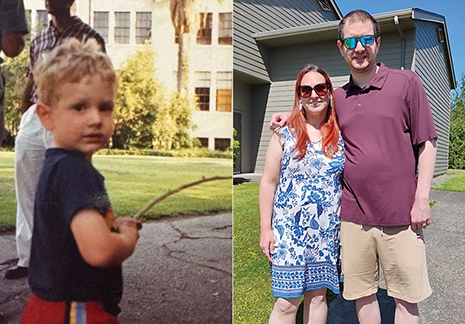
Growing up within the FMF1 community was very formative for my worldview and lifestyle.
There were practical things that contributed to this, like being able to participate in projects with the community, and then later my first job at William Carey Library. There were also more theoretical aspects, such as attending the morning community gathering (“morning meeting”) or the many missiological presentations that happened each week. I had many experiences that affected me on a foundational level, including working for and with others in the community over many years. These situations gave me the opportunity to discover my passions and the role that I could play in advancing the kingdom.
Growing up across the street from the campus led to a closeness with other FMF families and their children. There was a feeling of community and purposefulness in that environment that I have since sought to replicate in my adult life with my own family.
In my opinion, the legacy of the FMF is a call to action from Dr. Winter regarding unreached people groups, which has evolved in the past decade or so to frontier people groups. This focus is invaluable to the greater mission effort: fulfilling the Great Commission.
1 The Frontier Mission Fellowship (FMF) is the name of the Spiritual Order that comprised the US Center for World Mission (USCWM), which is now called Frontier Ventures.
Author
David Bogosian, Angela Clark, and Andrew Parsons
David Bogosian served for 10 years in Asia with the Frontier Mission Fellowship. He has a passion for mission collaboration, research and strategy, and currently serves with Missio Nexus as director of the Third of Us Alliance.
Angela Clark’s parents have been on staff with the US Center for World Mission (USCWM), now Frontier Ventures, since 2000. She grew up on the campus of the USCWM from the age of 7 to 18 and joined the staff of Frontier Ventures (remotely) in 2022.
Andrew Parsons grew up in the community of the Frontier Mission Fellowship (FMF) on the campus of the USCWM where his parents served for many years. He later worked in various roles for the organization.
Subscribe to Mission Frontiers
Please consider supporting Mission Frontiers by donating.
Subscribe to our Digital Newsletter and be notified when each new issue is published!