
This review covers three books by Woodley, Kwiyani, and Hunter.
There has yet to be a definitive account on alongsiding as the posture and approach for ministry among least reached peoples. A book like Subversive Mission is helpful, as it rearticulates the APEST model of ministry in a foreign cultural context.1 However, this review will bring insights from three different books: Decolonizing Mission by Harvey Kwiyani, Mission and the Cultural Other by Randy Woodley, and The Celtic Way of Evangelism by George G. Hunter III. The first book excellently presents the historical relationship of mission to power and colonial institutions as well as challenges in finding a new way forward.2 The second book is rooted in the experience of a Native American leader who began ministry in a traditional way while slowly moving towards an embrace of local traditions and practices through “The Harmony Way.”3 The final and oldest book presents a way forward and an example of something close to “alongsiding,” as well as a critique of missionaries who carried their cultural forms of worship, church, and faith practice into new lands.4 These selections provide a critical view of the modern missions movement and may discourage many while also providing a helpful alternative space to (re)consider one’s approach to mission and its potential ramifications. Kwiyani and Woodley speak from the space of the missionized: communities where whether by direct intent, accident, or forces beyond the missionary’s control, much damage was done to local cultures and communities. One wonders whether an alongsider posture might have mitigated some of these mistakes and injustices.
Decolonizing Mission

Kwiyani begins with a critique of the mission movement’s connection to power, empire, and colonialism.5 He admits in the first sentence that not every missionary from the West was a colonialist, and his critique is more historical, systemic, and structural than individual.6 He even mentions the connection of Western missionaries to the euro, dollar, and pound, pointing out structures that often exist beyond our view.7 After presenting a searing account of the Livingstone legacy,8 Kwiyani elucidates the relationship of the Messiah, the apostles, and the early church to empires and colonial powers.9 The church has always negotiated these relationships and at times stood against and critiqued these powers.
Kwiyani gives a long history of the European powers’ pursuit of expansion and the modern Western missions movement.10 This lengthy critique may discourage many in the missions community; however, it presents an important side of history that is often under- considered. Kwiyani suggests a way forward not from the centers of power but from the Global South just like the initial Galilean movement.11 He also declares the need for more black and brown voices in the fields of theology, missiology, and World Christianity.12
Kwiyani critiques William Carey’s model of mission to heathendom and how some contemporary Africans put this model forward.13 His critique focuses on mission models that rely on power more so than individual missionaries or their communities of origin.
Kwiyani emphasizes that Western communication places talking over listening while also sharing the reflections on Western “mission” of novelists, theologians, and African church leaders.14 He further states that missionaries did not bring God to the rest of the world, instead God’s people must go as co-labourers with no armies or empires behind them.15 This resonates with the need for Alongsiders. However, much like the description of an Alongsider, Kwiyani needs to further elucidate his next steps for a viable approach to mission in the present.
Mission and the Cultural Other
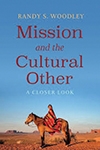
Woodley argues that the “Harmony Way,” core values of most Native North Americans, often parallels biblical values and creates a theological foundation for mission.16 Similar to Kwiyani, we find a critique of Western values in Woodley’s work while maintaining a high value for Scripture. Woodley shares of his early life where he practiced many different forms of Western evangelism and critiques the emphasis on the “sent” aspect of mission to the objectification of to whom we have been sent.17 Like Kwiyani, Woodley discloses a horrifying account of Christian “mission” in which a young Cherokee man and his white wife were hung and burned.18 Both authors insist upon disclosing the stories of pain and violence that come from narratives of supremacy and superiority.
Woodley also notes how paternalism produces little fruit as some studies estimate that only 3% of Native Americans nationwide are Christians.19 He then shares how his ministry approach changed through a conversation with an Ojibwe elder.20 This elder’s following of Jesus was rooted more in dreams and stories than Western structures and the texts that we commonly emphasize. Woodley’s emphasis on learning from elders and local wisdom can be connected to Paul’s approach of raising up local leaders in the early church (Titus 1:5–9).
Similar to Kwiyani, Woodley chronicles the connections between mission and political power followed by an emphasis on missionary learning, hospitality, and the vulnerability of Christ.21 He argues for a shift in one’s theological framework to encourage a more creation-based theology with a positive or at least more neutral view of culture.22 Woodley’s argument attempts to relevel the playing field and see “Western Christianity” as one depiction of how Christ may be followed in community.23 He then compares 18th-century European and Native American values to show that things like disease, bathing standards, and approaches to alcohol heavily impacted these early encounters.24 Quite simply, Europeans brought their problems and struggles with them, as well as their tools and technological improvements.
Woodley encourages a faith rooted in the everyday, which sees human beings as part of the created order involved in the work of shalom, wholeness, and healing.25 He sees the Harmony Way as honoring ancient Israelite systems of well-being, upsetting hierarchy, and restoring community.26 Woodley is speaking against practices of mission that seem to upset local dynamics, establish hierarchies between the missionary and missionized, and divide communities. For him, the good news is about honoring where God is already at work and hearing from the local traditions who may already have some knowledge of Christ and his path.
For Woodley, the gospel is living our lives in the same way that Jesus lived his life and not simply cognitive assent to truth claims.27 Woodley also beautifully connects the first Testament’s shalom, sabbath, and Jubilee constructs with Christ’s message and life in the second Testament.28 He closes with an impassioned plea for white Westerners to listen, listen, and listen some more and then join as a junior partner, not a senior partner, and as time passes, given the right attitude, potentially a co-partner.29 He ends the book at the beginning, which may leave many of us linear thinkers in a lurch.30 By finishing the book, we hope to have graduated to a new status, but we now must walk out its suggestions and insistently hold on to the role of junior partner until much begging from insiders, experience, and learning allows us to serve as co-partners.
The Celtic Way of Evangelism

Hunter claims that an early Christian movement shows us the way forward in the third millennium.31 He starts with the story of Patrick, who initially came to Ireland as a slave.32 Patrick returned to Ireland with an apostolic band that prayed for the sick, counseled, mediated conflicts, engaged in open-air speaking, and employed the arts.33 He carried out this work for 28 years and slowly devoted more time to administration and ordaining priests.34 This launched the first indigenous Christian movement in Ireland with at least 30 Irish tribes becoming substantially Christian.35 Irish Christianity spread after Patrick’s death and became distinctively Celtic, including lay monastic movements and communal orientation, which helped people navigate past, present, and future anxieties.36 Quite simply, individual and communal needs were addressed at a deep level, and prayers were generated for daily concerns and celebrations.37
This movement spread into Scotland, England, Wales, and continental Europe in the coming centuries.38 However, the Roman church was not happy with this form of Celtic faith—from its different hairstyles to its embrace of change to its refusals to use Latin language, worship, or organization.39 Hunter advocates for local rather than imported forms of church similar to Alongsiders who encourage and support meaningful local ways of gathering and demonstrating faith in Christ.40 This will likely bring the Alongsider questions and criticisms from their community of origin.
Hunter summarizes Celtic Christianity as fellowship, ministry, conversation, belief, and invitation.41 This approach requires patience in understanding both a culture and a people, as they steadily reflect upon the way of the Lord.42 Patrick was later identified as an Irishman because of his deep care for the people, both spiritually and physically.43 Like an Alongsider, he began to see things as the community did, while raising up leaders to support the growing church. Celtic Christianity effectively spoke to the right brain, which invited people’s imaginations to contribute to what a community of Christ-followers could look like, as opposed to more left-brain Roman Christianity, which brought a ready-made form of church.44 Some of my alongsider friends have noted how local “Christianity” will always seem weird to outsiders, because the locals have been able to imagine gathering and worship from the perspective of their community rather than embodying something from elsewhere.
Furthermore, Celtic leaders blessed the good they saw in other religious traditions while combating the evil with prayer; power encounters were few, leading to a more indigenous and creative expression of faith.45 Celtic Christianity became a more religion- and culture-friendly movement, as it utilized the sacred sites of primal religions, as well as many of the relics, holy days, festivals, and ceremonies in a manner that honored Christ.46 This gentler approach embodies the learning posture of an Alongsider maintaining deference to tradition while processing it alongside the message of Christ.
Celtic Christianity emphasizes the lived text over the written text, harnesses our imaginations in devotion to God, and pursues deeper community and ministry through soul friends and small groups.47 This requires credibility, clearance, contact, communication, conversation, and consistency.48 Celtic leaders understood that people find faith by being brought into conversation with other Christ followers.49 Woodley and Kwiyani submit that this conversation is often one-sided. Oftentimes, missionaries endeavor to do great things for God and share what they have experienced with him; however, wise Alongsiders temper these ambitions and urge listening to the other and to God. This produces anxiety and frustration, as well as the opportunity for creativity, imagination, and indigeneity. We desire to see Christ heard and demonstrated in ways that all people can understand; however, that work takes patience, deep relationship, listening, and a move of the Spirit in local hearts and minds.
Alongsiders must keenly listen to the successes and failures of the historic missions movement. They also must hear from the local people among whom they live. They must be listeners before doers, critical of their own understanding of the local context, and be patient. From here, like the Celts, they can fan into flame and bless the good that they already see rather than create from their own understanding. Alongsiding is not easy and requires great focus and dependence upon others.
NOTE: Because of so many footnotes, we have bunched them here.
1 Greenfield, Craig. Subversive Mission: Serving as Outsiders in a World of Need (Downers Grove: InterVarsity Press, 2022). Note: APEST stands for Apostle, Prophet, Evangelist, Shepherd, Teacher.
2 Kwiyani, Harvey C. Decolonizing Mission (London: SCM Press, 2025).
3 Woodley, Randy. Mission and the Cultural Other: A Closer Look (Eugene: Wipf and Stock Publishers, 2022).
4 Hunter III, George G. The Celtic Way of Evangelism: How Christianity Can Reach the West…Again (Nashville: Abingdon Press, 2010).
5 Kwiyani, Decolonizing Mission, 1–5; 6 Ibid, 1; 7 Ibid, 123; 8 Ibid, 20-37; 9 Ibid, 41-75; 10 Ibid, 76-136; 11 Ibid, 137-9; 12 Ibid,143-52; 13 Ibid,155-7; 14 Ibid, 184-97; 15 Ibid, 207
16 Woodley, Randy. Mission and the Cultural Other: A Closer Look (Eugene: Wipf and Stock Publishers, 2022), 8-12; 17 Ibid, 21, 31; 18 Ibid, 33-4; 19 Ibid, 36; 20 Ibid, 35-40; 21 Ibid, 47-75; 22 Ibid, 78-86
23 This reviewer and presumably Woodley both acknowledge that Western Christianity is not just one thing, while also agreeing that it has had a disproportionate influence on how others follow Christ. This argument attempts to find a way forward where a Christ-following path can be adjudicated by a local community
24 Woodley, 110-25; 25 Ibid, 127-44; 26 Ibid, 146-71; 27 Ibid, 173; 28 Ibid, 173-82; 29 Ibid, 187; 30 Ibid, 188; 31 Ibid, x
32 Hunter III, George G. The Celtic Way of Evangelism: How Christianity Can Reach the West…Again (Nashville: Abingdon Press, 2010), 1-3; 33 Ibid, 9-10; 34 Ibid, 10-1; 35 Ibid, 11; 36 Ibid, 14-21; 37 Ibid, 21-4; 38 Ibid, 25-9; 39 Ibid, 29-33; 40 Ibid, 34-5; 41 Ibid, 43
42 From a common phrasing of Dr. Dan Shaw’s (Fuller Seminary): God had something to say to the Samo, but I often didn’t know what, so I listened and observed, so I might understand;
43 Hunter III, 58; 44 Ibid, 67; 45 Ibid, 86-7; 46 Ibid, 88-9; 47 Ibid, 95-9; 48 Ibid, 104-6; 49 Ibid, 107.
Author
ANDY BETTENCOURT
Andy Bettencourt is the Managing Editor of the International Journal of Frontier Missiology and co-host of the Missions Drop Podcast. Andy’s passion is to research deeply to better understand the challenges of demonstrating the gospel.
Subscribe to Mission Frontiers
Please consider supporting Mission Frontiers by donating.
Subscribe to our Digital Newsletter and be notified when each new issue is published!