
The year 2015 marked the first time I met someone who worked full-time in prayer. After spending two decades in the business and technology marketplace, I was unfamiliar with this vocational category. The late Karen Braun had, for many years, served Power to Change Canada by cultivating prayer across the nation. We met with the intention of helping a ministry organization become more prayer-centric. Little did I know that just three years later, I would find myself on a Zoom call with her and with my wife, as she prayed over us and symbolically passed on her mantle of prayer. Karen went home to be with her Savior at the end of August 2018.
As I reflect on the 40 years since I surrendered my life to Jesus, I am reminded of the impossibility of a created being ever bridging the gap between the finite world and the unapproachable holiness of God. “Who is able to stand in the presence of the Lord, this holy God?” (1 Sam 6:20). Yet I am deeply grateful for the mystery of God’s plan to enter humanity and bridge that gap, and for the grace that allows us not only to stand in his presence but also to commune with him in prayer (Eph 3:2–12).
Learning Prayer Early
Since my early days of following Jesus in the mid-1980s, I have been committed to prayer and to the persecuted church. Some of the first books I read as a believer were by Dietrich Bonhoeffer, David Wilkerson, and Brother Andrew. I attended events such as Mission Advance 1989 and Urbana 1990, and I was shaped by writers and thinkers such as Luis Bush, Ralph Winter, Jim and Elisabeth Elliot, and Francis Schaeffer.
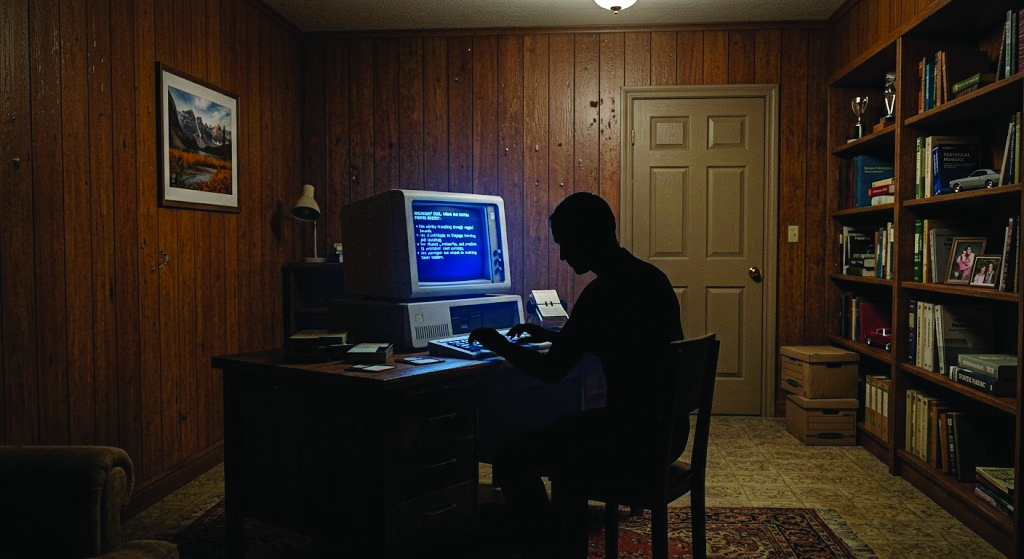
Newsletters from International Teams, WEC, and other mission organizations arrived in my mailbox every month or so. I diligently retyped their prayer requests into blue-screen email clients and forwarded them to small distribution lists of friends whom I knew would pray. These were the days before the internet carried images and before social media existed.
Prayer at Work
As my career moved through public- and private-sector organizations, I helped catalyze several corporate Christian fellowship groups in which believing staff members prayed for one another and interceded for colleagues and organizational leaders. During those years, I became increasingly aware of the importance of having a trusted team of intercessors praying for my family. I also saw how offering to pray for others often opened doors that seemed locked.
Prayer gradually became a lifeline for me—not merely a discipline, but a means of blessing others and discerning God’s activity in complex environments.
Meeting MBBs Face-to-Face
Around 2010, I began regularly meeting followers of Jesus who had formerly been Muslims, sometimes referred to as Muslim-background believers (MBBs). I was deeply moved by their journeys, particularly by the role dreams and visions played in their early encounters with Jesus and by their testimonies of perseverance through intense persecution.
Although I had supported ministry work in the Middle East and North Africa for years, this marked my first face-to-face experience with these believers. As I got to know them, I felt drawn to pray for them. One brother in the Persian Gulf, who warmly called me Habibi, shared that he regularly prayed for me and my family. At the same time, I became acutely aware of how little prayer actually occurred in many ministry meetings and how difficult it was to catalyze sustained prayer in that context.
From Concern to Calling
By 2017, I felt compelled to respond. I was introduced to a network of “prayer strategists”—a new concept to me. Our focus broadened from the Muslim world to all unreached people groups, seeking John 17-shaped unity among gospel laborers. Recognizing that prayer movements, mission agencies, and church networks often ran on parallel tracks, we sought to help bring them into alignment.
Instead of another prayer meeting, we focused on thought leadership and innovation. In 2018, the Extraordinary Prayer Task Force formed. Karen Braun’s opening prayer on our first call felt providential—a personal blessing and a confirmation of what lay ahead. It was in this special team—I won’t try to list them all by name—that I became part of a worldwide family of dear prayer leaders who continue to impact me to this day.
The task force met via Zoom, and by mid-2019 nearly 200 strategists were participating. When COVID-19 hit in 2020, this community was already prepared to intercede through global disruption.
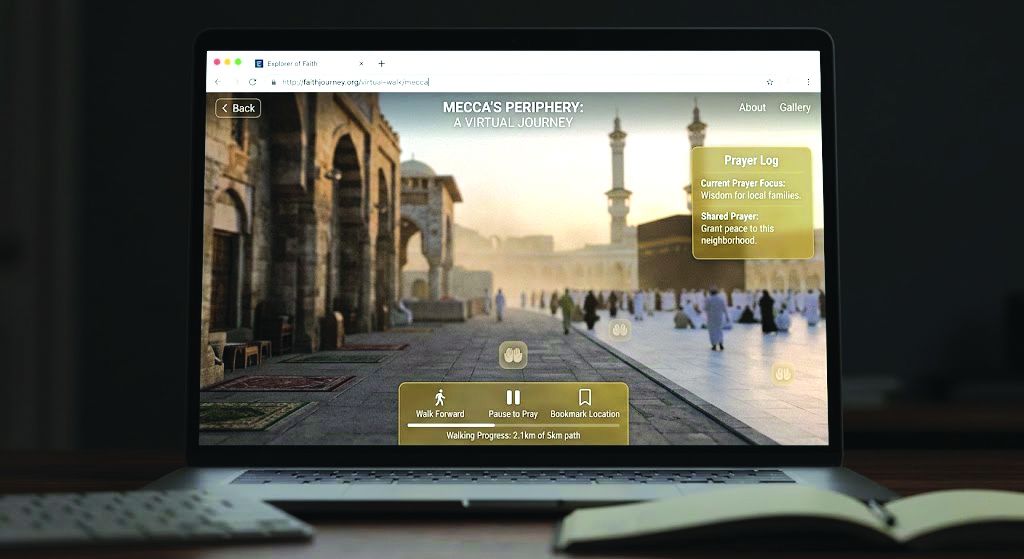
We prayed for frontier people groups, practiced virtual prayer walking in cities via Google Maps, and learned from movements and sustained 24/7 prayer canopies. In breakout groups, we practiced listening prayer, honored one another, and sought to exalt King Jesus.
Prayer and Power
During this same period, I became connected with a team of intercessors engaged in global prophetic prayer. Inspired by the sons of Issachar, who “understood the signs of the times” (1 Chron 12:32), this community prays into world affairs, seasons of transition, and supranational institutions, while contending for peace in regions scarred by conflict and war.
This is not abstract theology. As N.T. Wright observes, the prayer Jesus taught his followers is “a bold and risky prayer.”1 Some of our team live within conflict zones themselves, and they intentionally gather people from opposing sides to pursue repentance, reconciliation, and healing.
I have been struck by how the petition, “Your kingdom come,” takes on flesh in geopolitical realities. I have prayed alongside intercessors—some in their sixties and seventies—who willingly travel into some of the world’s most dangerous regions, trusting prayer as their primary act of obedience and hope. This is not something I learned in seminary. Lord, help me to trust you more deeply, that I may follow you even into the hardest places.
Where Prayer Is Survival
Last year, I walked the semi-arid red dust of the Sahel. Deep inland, I shared in and led prayer within an MBB church where temperatures pushed 40°C and the nearest power grid lay a three-hour drive away. Prayer there was a full-body experience—one that would challenge even the most charismatic congregations. Drums pounded as prayer blended with rhythms felt deep in the chest.
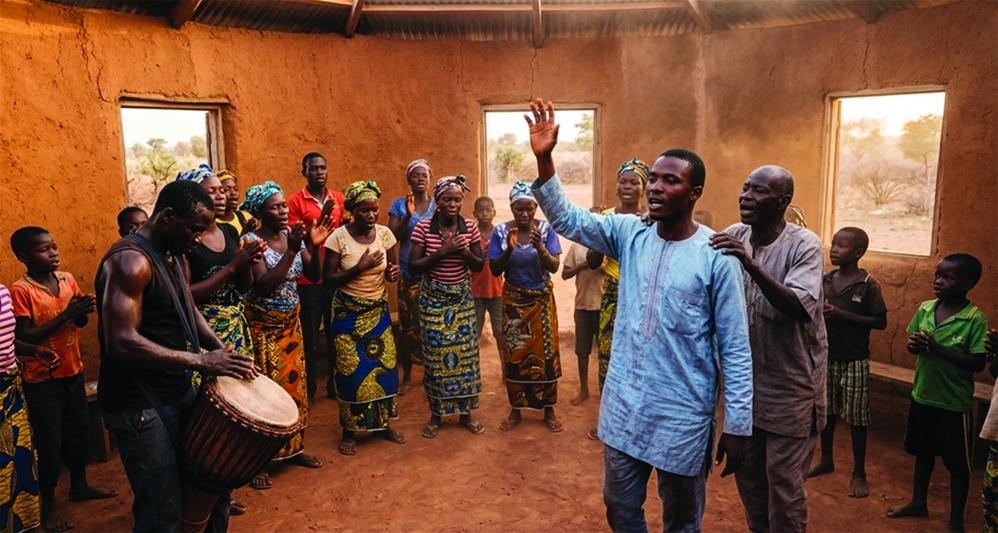
At one point, a woman began manifesting a demon. She was carried next door and left to recover while children continued to play and worship proceeded uninterrupted. In this setting, prayer is not an event one attends; it is the air one breathes to survive.
Outside, I sat on a stone step with a Muslim man with whom I had shared part of my lunch. “Mohammed” told me he had visited a witch doctor earlier that week and soon afterward had broken out in a severe rash. On these frontiers of mission, the war is real.
Keeping the Flame Burning
A month later, I found myself praying in a tower of prayer in Indonesia. Across the country, there are more than 500 such towers, with nearly 80 percent committed to continuous, 24/7 prayer. Believers pray day and night, holding fast to the conviction that, “The fire must be kept burning on the altar; it must not go out” (Lev 6:13).
I was humbled to pray alongside these watchmen and watchwomen, who intercede not only for their own nation but for countries across Asia and around the world. The tower is more than a building; it is a posture. They pray with confidence that the words of Jesus still hold true: “I will give you the keys of the kingdom of heaven; whatever you bind on earth will be bound in heaven, and whatever you loose on earth will be loosed in heaven” (Matt 16:19).
Open Doors, Hidden Churches
My travels also took me to two modern, Antioch-like cities: Singapore and Dubai—global hubs where the Great Commission intersects with international capital. In Singapore, I worshiped with 8,000 young people in a convention center filled with atmospheric haze and synchronized media. In Dubai, I joined 1,200 others in congregational worship and prayer in a luxury ballroom.
In both cities, there is an atmosphere of apparent freedom. And yet, not far away, MBBs gather quietly in the shadows of the underground church. The paradox is jarring.
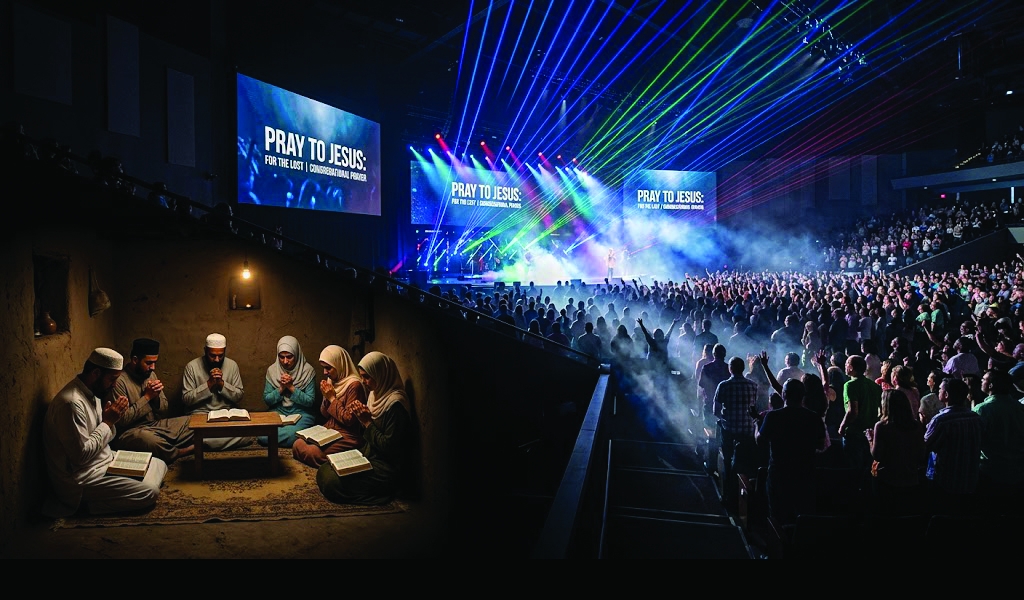
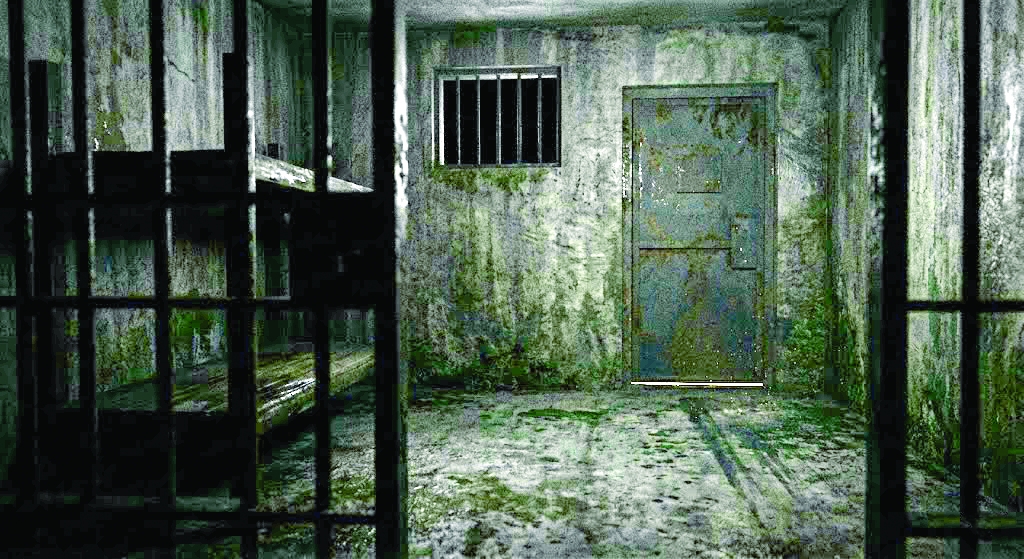
Those who have paid a high price for their faith are often unable to walk through the doors of these large churches. I met one such believer, Sharifah, in Southeast Asia. She had escaped from a religious reeducation center after enduring brutal caning for her faith. Her survival hinged on prayer. She asked God for three signs: a storm, a blackout, and an open door. After three months of incarceration, a storm came. The power failed. The locked door opened at her touch. Her story echoes the account of Paul and Silas, whose prayers shook a prison’s foundations (Acts 16). The same God still opens doors in response to desperate intercession.
The Choreography of Communion
Recently, I have been reading the writings of the Church Fathers and Mothers, noting four consistent threads woven through their lives: They prayed with their bodies through fasting, anchored their days in regular hours of prayer, manifested their devotion through radical generosity, and guarded the peace of their communities through tireless reconciliation (Didache 4:5–6; 8:1, 8:3; 14:1–2).

I am discovering that prayer is not an activity we fit into a life; it is a way of being alive before and in communion with God. In every age, the ancient invitation remains the same—that our lives themselves become intercession: “Therefore, I urge you, brothers and sisters, in view of God’s mercy, to offer your bodies as a living sacrifice, holy and pleasing to God—this is your true and proper worship” (Rom 12:1).
True intercession, then, is not found in the eloquence of our petitions, but in the intimacy of the dance.
Like a couple long in love, hands held open in surrender in the midst of the mess around us, we begin to move as one with the Father—lifting our friends and loved ones, the unreached, and the heavy burdens of the world to be held, where the pain of the world meets the love of God, in the hands of Jesus, to be carried to the throne.
In this mystery, service is not a task but an overflow; we yield the seat of honor or step into the shadows not out of duty, but in response to the Father’s dancing over us—a joy that flows from the cross and resurrection. We fade, he increases, until that time when the knowledge of his glory will fill the earth as the waters cover the sea (Hab 2:14). One day—soon—we will dance before the throne. Until then, may our very existence become the amen. Come, Lord Jesus.
1 Wright, N.T. The Lord and His Prayer (Grand Rapids, MI: Eerdmans, 1996), 1.
Author
BROTHER DAOUD
All Scripture references are from the NIV.
Brother Daoud and his wife seek to wash the feet of fellow believers and MBBs in various nations as the Spirit leads. He also enjoys spending time in God’s Creation—be it gardening, birdwatching, or photography.
Subscribe to Mission Frontiers
Please consider supporting Mission Frontiers by donating.
Subscribe to our Digital Newsletter and be notified when each new issue is published!