
I recently asked some friends to share what misconceptions they had before coming to the field. A common theme was expecting life overseas to be exciting or romantic, with every moment filled with meaningful activity.
I quickly learned reality is not so glamorous! There was a honeymoon period after we first arrived, when everything felt new and exciting: new language, food, friendships. But when these things started to become normal, I realized how much of my life here resembled my life back in the US. And not the fun parts—the boring parts! We still needed to get our kids ready for school every day, plan meals, answer emails, and get our oil changed.
“I had a very romanticized view of being a worker. I just thought it would be exciting all the time,” said a friend when I asked her about misconceptions she had before coming to the field. “I didn’t realize how much being a worker in this part of the world is 'day in, day out' living for him. There are some exciting moments, but much of it is faithfulness in the small things, and there is a lot of mundaneness.”
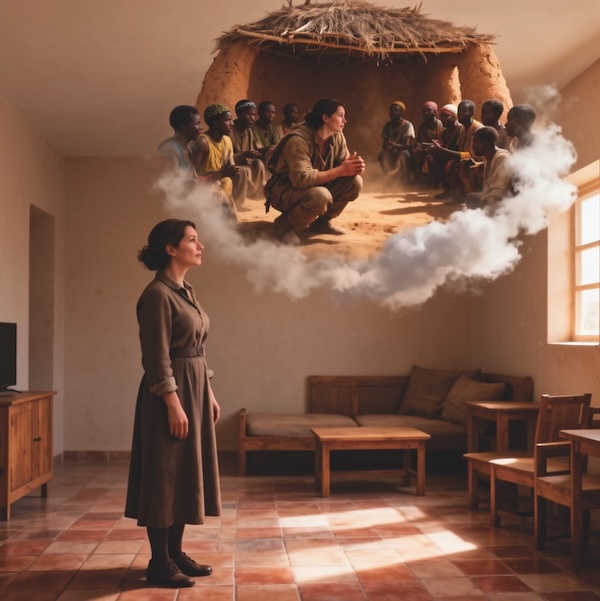
I think a lot of workers started picturing themselves on the field when they were young. Like other kids dreaming of becoming doctors or astronauts, we pictured ourselves crouched on the floor of a mud hut in Africa, having deep theological discussions in a language with lots of clicking. Before I came to the field, my dreams were part Jane Goodall, part Indiana Jones, part Elisabeth Elliot.
I loved a song called “Seize the Day” by Carolyn Arends, who was a popular CCM artist in the '90s. The lyrics say: “I know a doctor, a fine young physician/Left a six-figure job for a mission position/He’s healing the sick, in an African clinic/He works in the dirt and writes home to the cynics/We work through the night almost every day/As we watch the sun rise we can say/Seize the day ...” Talk about romantic!
While dirt floors and working through the night might be a reality for some workers, it’s not mine. My floor is often dirty—I live not far from the Sahara Desert—but it’s tiled. I have running water, electricity, and dependable wifi, and so do most of my neighbors. And I do have theological discussions with locals, often in Instagram-worthy coffee shops. But not every day.
I think the misconception that our lives as workers are spent mostly engaged in deep, meaningful spiritual work is held not just by aspiring workers, but also by support communities.
My teammate recently visited her passport country after two years on the field. Some well-meaning church members put a post on social media inviting people to “come and hear all about what God is doing” in our region. My poor teammate was so stressed out about coming up with good stories to share! This is a woman with an evangelist’s heart and a strong work ethic, but most of her time over the past two years has been dedicated to learning language and helping her kids adjust to life in a new country.
The pressure to report back to our support communities with metrics—people baptized, Bible studies started, and churches planted—can be overwhelming. While we hope and pray for these things to take place, the reality, especially for those of us working among unreached or unengaged people groups, is there may be years of investment required before we get to see this kind of fruit.
Our challenge as workers (as Christ followers) is to be open to opportunities to be salt and light throughout our day. Whether we’re getting our vegetables weighed at the grocery store, sitting in the waiting room at the pediatrician’s office, or riding public transportation, we’re looking for opportunities to share something that says, “I’m a person who cares about spiritual things. Let’s talk.”
A lot of our time is spent preparing for these moments. How do we do that? We learn the local language. We learn spiritual vocabulary in the local dialect. We learn how to present ourselves in a respectful and approachable way. We learn where in the city we are most likely to encounter our targeted people group and at what time of the day. We learn which topics they enjoy discussing and which topics are taboo. We learn through training, reading, observing, and making a lot of mistakes. This preparation is crucial and time consuming, but it doesn’t make for very exciting slideshow content!
When I’m feeling discouraged about how much of my time is spent focusing on the “mundane,” the Lord often reminds me of a quote from the devotional My Utmost for His Highest by Oswald Chambers: “We are not meant to be seen as God’s perfect, bright-shining examples, but to be seen as the everyday essence of ordinary life exhibiting the miracle of His grace. Drudgery is the test of genuine character. The greatest hindrance in our spiritual life is that we will only look for big things to do. Yet, ‘Jesus…took a towel and…began to wash the disciples’ feet…’ (John 13:3-5).”1
As a first-born, type-A, to-do-list-making type of woman, I long to be God’s perfect, bright shining example! But I’m so thankful he calls me instead to display his grace as I faithfully complete the tasks he’s called me to each day—no matter how mundane they might seem.
I think many of us come to the field looking for big things to do. And that’s not a bad thing! We want to honor God with our time and talents. We want to see the nations enter the kingdom. But it’s important to remember Jesus’ example. He was familiar with the mundane and faithful to do the small, seemingly insignificant tasks that are the building blocks of the kingdom. May we exhibit the miracle of his grace as we faithfully serve him, in big and small ways.
For those of you from the support community, I’m not asking for permission to be unproductive. I am asking for recognition that our work does not often yield a clear, quantifiable, or immediate return on investment, but that doesn’t make it less valuable. I’m asking you to keep supporting your workers through seasons that may not look impressive in terms of metrics, but they provide critically important time to adapt and learn. May you exhibit the miracle of his grace as you love and support your field workers in whatever tasks the Lord has called them to in this season.
1 utmost.org/updated/get-moving-2/
Author
IRENE SPRINGFIELD (Pseudonym)
Irene Springfield and her husband have been field workers in North Africa for eight years and team leaders for three years. Their ministry is focused on sharing the gospel with high-identity Muslims. They have three children.
Subscribe to Mission Frontiers
Please consider supporting Mission Frontiers by donating.
Subscribe to our Digital Newsletter and be notified when each new issue is published!