
In Religion for Realists, Christian sociologist Samuel Perry challenges readers to look at religion with fresh, “realist” eyes. According to Perry’s research, religion is here to stay, religion defines “us” versus “them,” and the actual practice of religion has more flexibility within it than we think. How do these realities relate to Jesus-centered witness in Muslim contexts?
Religion Is Here to Stay
Perry states that “religion is among the most powerful and pervasive forces in the world.”1 Those involved in witness with Muslims can attest to its resilience. In most contexts, religious identity is assigned at birth and informs social norms, holidays, rites of passage, dress, diet, education, choice of spouse, child rearing, as well as death and burial rituals.
Religion Defines “Us” Versus “Them”
Perry notes that belonging to a religious community easily produces a strong sense of “us” versus “them,” along with pressure never to leave the community. Religion, he writes, is about “relationships to in-group and out-group members. Religion is sacralized ‘us-ness.’”2
For 25 years we lived in Asian Muslim communities. Neighbors and friends became like aunties and uncles to our children. We shared what we experienced of God through Isa al-Masih (Jesus the Messiah), even praying with these friends. Yet despite this closeness, we always felt the religious divide between us and the rest of the community—especially at funerals.
The body of our deceased neighbor would be wrapped in white and laid on the living room floor as we all paid our respects. The local religious leader would end the gathering with this message: “Dearly beloved, one day it will be your body lying wrapped in a burial shroud. Therefore, stay true to our religion and don’t die unless you die inside Islam.”
The Practice of Religion Can Have More Flexibility Within It Than We Think
Perry found that religious affiliation often centers more on belonging to a community than on personal belief or conviction. Virtually all our neighbors were Muslim, yet many held beliefs not officially endorsed by textbook Islam. Engaging in spiritual discussions and healing prayer with them, we came to better understand how they thought and felt. Some described experiencing God’s presence; others wondered if God even cares. Some practiced occult or folk traditions. Still others—often through an exploratory Bible study, a healing, or a dream—came to embrace Jesus as Lord and Savior yet did not feel compelled to leave the community where God determined they would be born (Acts 17:26).
What we saw among everyday Muslims was that, within certain boundaries, there was more “wiggle room” than we imagined. Perry observes that on the ground we often see “how malleable and situational theological beliefs end up being.”3
The sentiments of Mazhar Mallouhi, Middle Eastern author and devoted Muslim follower of Jesus, are instructive:
I have an emotional attachment to my culture which I imbibed along with my mother’s milk… However, although I am born a Muslim, I am not obligated to practice it, nor am I obligated to believe all of it. But the day I reject it outright, I disavow myself of my family, my community, and my people. There are many ways to bring the gospel… and the words I use to describe a life-changing relationship with God through Christ will determine how the community understands and reacts to my journey.4
Biblical Reflections: Faith, the Kingdom of God, and Religion
The operative paradigm of Muslim-Christian interaction has historically been that Muslims wanting to follow Jesus must not only have faith in him and enter the kingdom of God but must change their religious identity as well. Biblical reflection on religion, faith and the kingdom of God, however, may point the way to another paradigm, one which could be good news to Muslims who want to follow God through Jesus but also long to honor the family, culture, and community of their birth.
Jesus called people to follow him, put their faith in God through him, and live in the kingdom of God. His words about religion were few—he pointed instead to a kingdom not of this world (John 18:36). Yet the people of this kingdom remain in the world (John 17:15–16) and pray for it to come to the world (Matt 6:10). This kingdom is above and beyond religion—neither on this mountain nor in Jerusalem—centered not in Samaritan religion or Jewish religion, but in this kingdom where God who is Spirit, is worshipped in Spirit and truth (John 4:21–24).
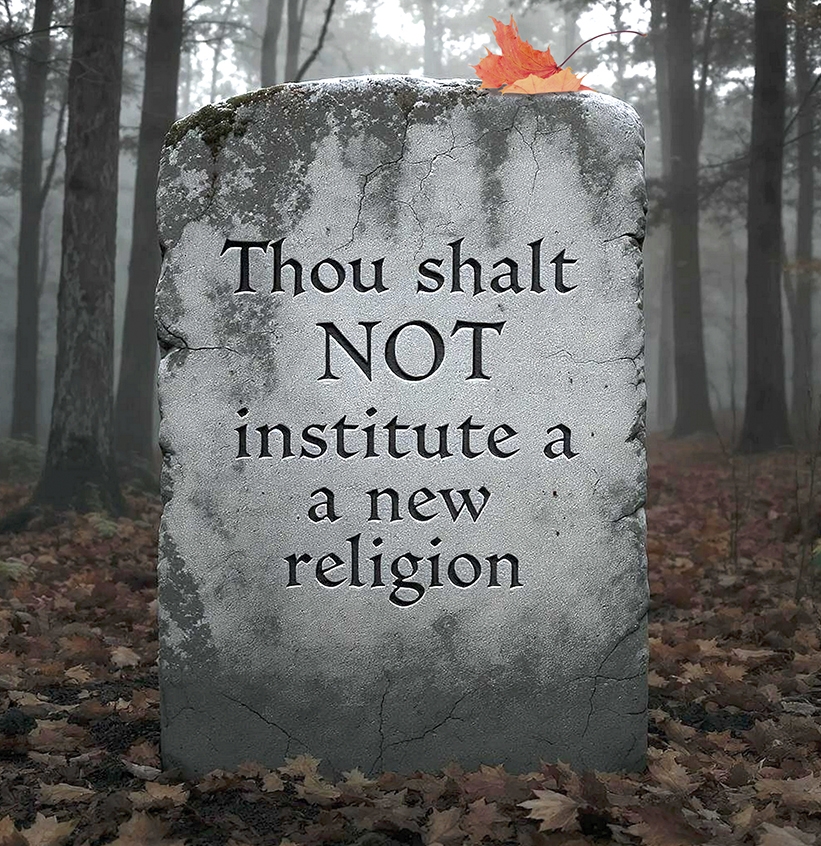
After God raised him from the dead, Jesus spent forty days with his followers. There is no mention of establishing a new religion with structure and tenets—only Jesus instructing them about the kingdom of God (Acts 1:1–3).

Jesus called Paul to follow him and sent him “far away to the Gentiles” (Acts 22:21). Gentiles were outside the Jewish religion and in religions of their own, where the emperor was worshipped and circumcision was forbidden. The Jews, the people of God, were “the Circumcision;” non-Jews were “the Uncircumcision”—religious identity was clear. Yet Paul, following in the way of Jesus, declared that religious identity, Circumcision or Uncircumcision, means nothing. Instead, it is the kingdom of God (Acts 28:31), where God is the God of people in both religious identities (Rom 3:29–30), and God is worshipped in Spirit (Phil 3:3) just as Jesus declared to the Samaritan woman. Though religious identity differs, those in Christ have access in one Spirit to God (Eph 2:18) and are one new humanity (Eph 2:15).
If religious identity counts for nothing, what does count? A new creation—a new humanity—is everything (Gal 6:15; 2 Cor 5:17). Obeying God’s commandments is what matters (1 Cor 7:19; Acts 10:34–35). The only thing that counts is faith working through love (Gal 5:6)—kingdom yeast working through batches of dough, though hidden at first (Matt 13:33).
In Transforming Mission: Paradigm Shifts in Theology of Mission, mission theologian David Bosch wrote, “I have suggested that Jesus had no intention of founding a new religion.” Rather, “the community around Jesus was to function as a community for the sake of all others… Never, however, was this community to sever itself from the others.”5 Bosch adds that Jesus gave his followers no religious name, specialized language, distinctive clothing, or geographical center. Sadly, “in the course of time the Jesus community simply became a new religion, Christianity, a new principle of division among humankind. And so it has remained to this day.”6
What if God sees the peoples of the world, in their various groups and religious identities, like batches of dough, into which the yeast of the kingdom must be worked so the whole lump rises and is transformed? Could it be that people in groups known as non-Christian might remain in the religious identity where they were raised (1 Cor 7:17–19), living obediently to God, and putting their faith in Christ? Might the fluidity within religious groups that Perry notes point to a way for kingdom transformation from within? Is it possible that God intentionally causes people to be born into various social and religious identities (Acts 17:26) so that he can show mercy to all (Acts 17:27; Rom 11:32), and that they can remain without compromise (James 1:27) as salt and light (Matt 5:13–16)?
The Kingdom for Realists in Muslim Contexts
The October 2025 edition of Mission Frontiers features “Transformation from Within: Christ-Centered Movements in Muslim Societies” by Steve and Kitty Holloway, where we read accounts of networks or communities of Muslims transformed by Christ who do not adopt foreign religious forms or identities. This theme also appeared in the October 2024 Fuller Theological Seminary missiological lectures honoring Dudley Woodberry, who in his research encountered groups of Muslims following Jesus from within their own religious communities.7
One panelist in the lectures, Nursen Ahmed, PhD, a self-described Muslim follower of Jesus, spoke about following Jesus and obeying the Bible while remaining part of the Muslim community. Five principles are discernable in his lecture: regeneration, remaining, reinterpreting, rejecting, and retaining.
Regeneration (spiritual transformation). Nursen clearly described his transformation in Jesus: “When I accepted Jesus as my Savior and my Lord… Jesus brought me into the new kingdom, the kingdom of God.”
Remaining. Even as he follows Jesus and holds beliefs differing from most fellow Muslims, Nursen still self-identifies as Muslim, “a Muslim who follows Jesus.”
Reinterpreting. He reinterprets certain Muslim practices, such as ritual prayer:
The ritual of bowing in prayer (salat) is found in the Bible in Nehemiah 8:5–6. However, my understanding of prayer is a little bit different from that of many Muslims. For me, prayer is not limited to just five times per day. For me, the salat prayer is meant to be a time to connect with God. However, this connection with God should not just be during the five prayer times. Our connection with the living God should be 24 hours per day.
Rejecting. Nursen also points out religious and cultural beliefs and practices that he personally rejects. For example, most Muslims teach that the holy books of the Jews and Christians (i.e., the Old and New Testament, that is, Taurat, Zabur and Injil) have been corrupted over the centuries. Nursen however rejects this common Muslim belief. He stated:
So how do I follow Jesus and his teaching? For me, it is primarily through studying and following the words of Jesus in the Bible. Because I don’t believe the Bible has been corrupted or changed over time, I am convinced it is authoritative and is an accurate guide for our lives.
He also rejects folk practices involving demons or the occult. He knows that Islam officially rejects these practices also, yet when he was younger, he was involved in many of them. He stated:
That’s why when I accepted Jesus as my Savior and my Lord, I needed deliverance ministry. Evil spirits were attached to me, and influenced me spiritually, mentally and physically… but when I believed in Jesus, Jesus brought me into the new kingdom, the kingdom of God. I experienced wonderful freedom.
Retaining. Nursen retains Muslim practices he sees as biblically affirmed, such as fasting (sawm) and giving to the poor (zakat), noting their parallels in Scripture. He continues to perform the regular prayers but rejects or reinterprets any aspect not aligned with the Bible.
Conclusion
Perry’s research shows that religion primarily defines “bonds of community rather than what people in those communities believe.”8 Field accounts from the Holloways’ article show that Jesus-centered groups are multiplying within Muslim communities. Scripture shows that it is not religious identity that counts, but rather faith expressed through love in the kingdom of God. Therefore, let us gladly welcome expressions of biblical faith that do not require Muslims to change their religious identity to follow Jesus. The five-fold pattern of regeneration, remaining, reinterpreting, rejecting and retaining, seen in the testimony of Nursen, shows the way Muslims can remain in their community, experience transformation and stay biblically focused. May God cause increasing numbers of Muslims to enter his kingdom—as Nursen Ahmed, Mazhar Mallouhi, and those described by the Holloways have—without rejecting the family, community, culture, and religious identity of their birth.
1 Perry Samuel L. Religion for Realists: Why We All Need the Scientific Study of Religion (New York: Oxford University Press, 2024), 3.
2 Perry, 41.
3 Perry, 47.
4 Mazhar Mallouhi, “Comments on the Insider Movement,” in Understanding Insider Movements: Disciples of Jesus Within Diverse Religious Communities, eds. Harley Talman and John J. Travis (Pasadena, CA: William Carey Library), 111.
5 David J. Bosch, Transforming Mission: Paradigm Shifts in Theology of Mission (Maryknoll, NY: Orbis, 1996), 51.
6 Bosch,51.
7 October 2024 Fuller Theological Seminary missiological lectures honoring Dudley Woodberry. A complete version of this lecture will be published, ed. Jose Abraham.
8 Perry (2024), 44.
Author
JOHN JAY TRAVIS and ANNA TRAVIS
John Jay and Anna Travis have been involved in witness in Muslim contexts since the 1980s. Both are graduates of Fuller Theological Seminary where Jay currently teaches as affiliate faculty. The Travises train, teach, and write on contextualization, movements to Jesus, Scripture engagement, and inner healing prayer.
Subscribe to Mission Frontiers
Please consider supporting Mission Frontiers by donating.
Subscribe to our Digital Newsletter and be notified when each new issue is published!